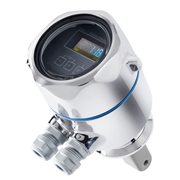
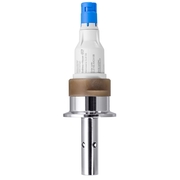
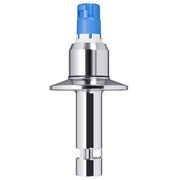
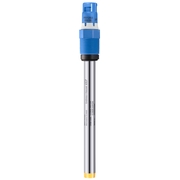
Диапазон измерения200 мкСм/см...1000 мС/см Константа ячейки k : 11,0/см 1/см
Рабочая температура-10°C...110°C (14°F...230°F) Стерилизация: 130°C/6 бар абс. (макс. 60 мин) (макс. 266°F/72,5 фунт/кв. дюйм при 87 psi макс. 60 мин)
Рабочее давление12 бар абс до 50°C (188,5 psi до 122°F ) 7,75 бар абс при 110°C(112 psi при 230°F) 6 бар абс при 130°C до 60 мин (87 psi при 266°F до 60 мин)
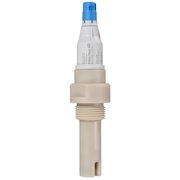
Диапазон измеренияk=0,01: 0.04 to 20 µS/cm k=0,1: 0.10 to 200 µS/cm
Рабочая температураThreaded with fixed cable: -20 to 100 °C (-4 to 212 °F) Threaded with plug-in head: -20 to 120 °C (-4 to 248 °F) Sterilization: max. 140 °C (284 °F) for 30 minutes
Рабочее давление13 bar at 20 °C (188 psi at 68 °F) absolute 2 bar at 120 °C (14 psi at 248 °F) absolute
In many applications conductivity is crucial for process control, product monitoring, water monitoring, or leakage detection. We provide reliable and accurate instruments for all measurement ranges and conditions, such as ultrapure water, CIP cycles, hazardous areas or hygienic processes. Check out our broad offering of conductive and toroidal conductivity sensors, transmitters and helpful calibration tools by clicking on the button below.
How to select conductivity sensors
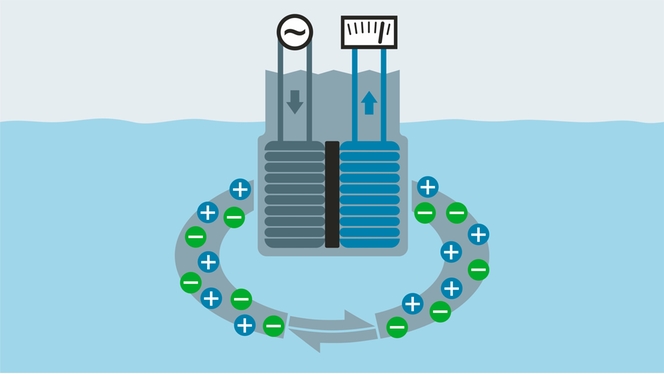
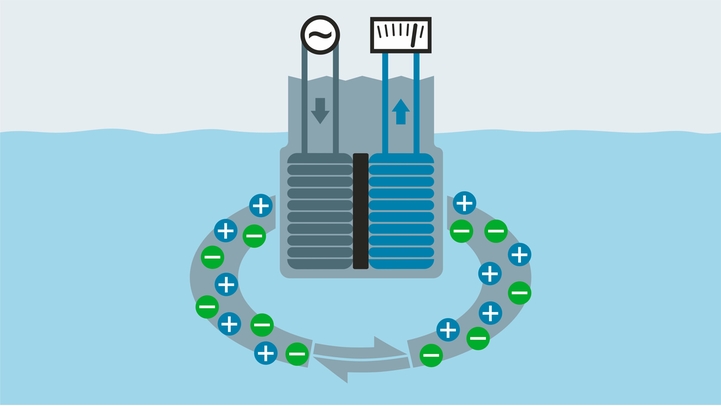
Conductivity sensors and transmitters are used in many industries such as food & beverage, chemicals, life sciences, pharma, water and power. The sensor selection depends on the application and the conductivity range. To measure low conductivities in pure and ultrapure water, choose conductive sensors. Use toroidal sensors in media with high conductivity (e.g. milk, beer, bases, acids, brine) and apply 4-electrode sensors where a wide measuring range is required (e.g. phase separation).
The conductivity of a liquid can be measured using the conductive or toroidal measuring principles. This video shows what it is about and how these measuring principles work.
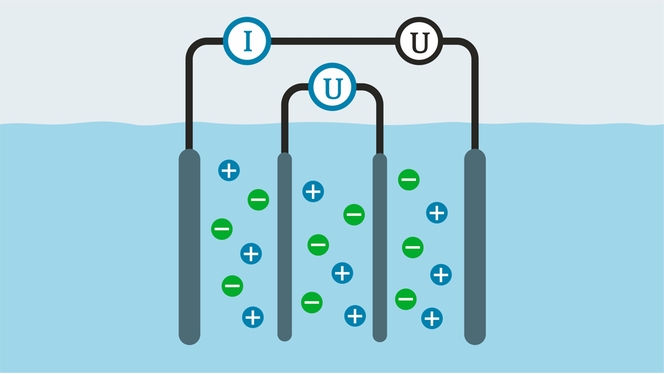
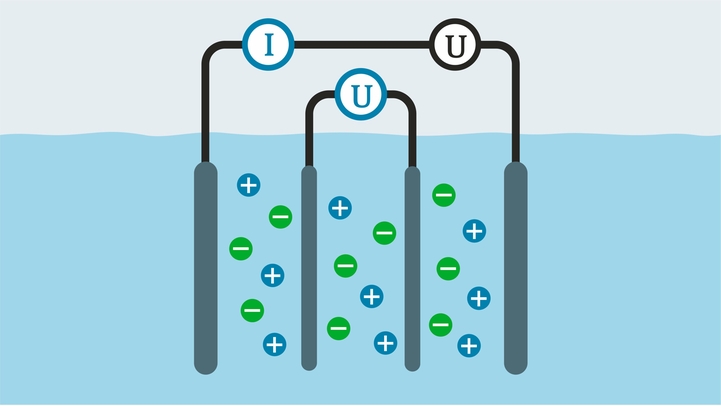
The four-electrode conductivity measurement is suitable for broad measuring ranges or when the ion concentration in a liquid is very high. This video shows how the measuring principle works.
Conductivity measurement with conductive sensors
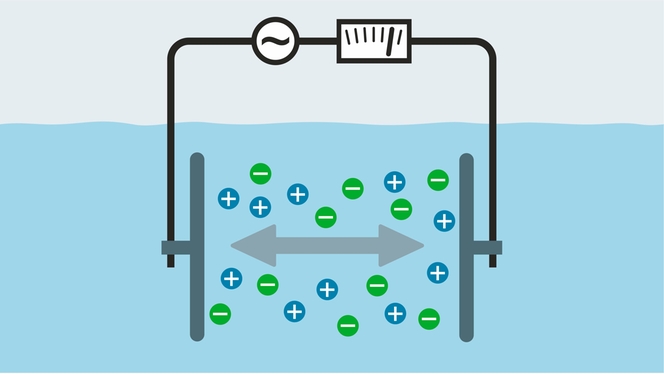
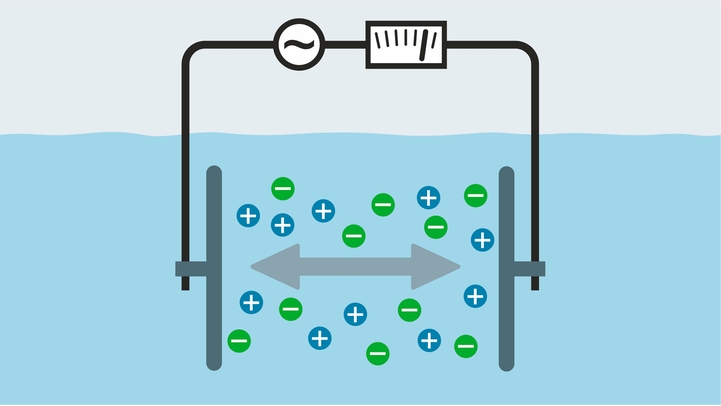
Conductive probes feature two electrodes that are positioned opposite from each other. An alternating voltage is applied to the electrodes which generates a current in the medium. The intensity of the current depends on the number of the medium's free anions and cations that move between the two electrodes. The more free anions and cations the liquid contains, the higher the electrical conductivity and the current flow. The conductivity unit is "Siemens per meter".
Conductivity measurement with conductive 4-electrode sensors
A high ion concentration in the medium leads to a mutual repulsion of the ions and thus a reduction of the current - the so called polarization effect. This can influence the measuring accuracy of conductive probes. 4-electrode sensors have two electrodes that are currentless and therefore not affected by the polarization effect. They measure the potential difference in the medium. A connected transmitter uses the measured potential difference and current to calculate the conductivity value.
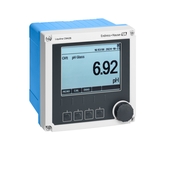
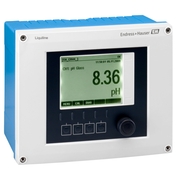
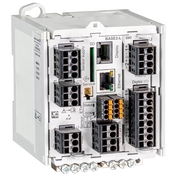
Выбирая платформу Liquiline, вы получаете эффективную экономию складских запасов, сокращение времени на установку и выигрываете в эксплуатационной безопасности!
/
Ваша конфиденциальность очень важна для нас
Мы используем файлы cookie для повышения удобства просмотра веб-страниц, сбора статистических данных для оптимизации функциональности сайта, а также для показа рекламы и контента, адаптированных специально под вас.
Выбирая опцию "Принять все", вы соглашаетесь с использованием нами файлов cookie.
Для получения более подробной информации ознакомьтесь с нашей Политикой использования файлов cookie .